
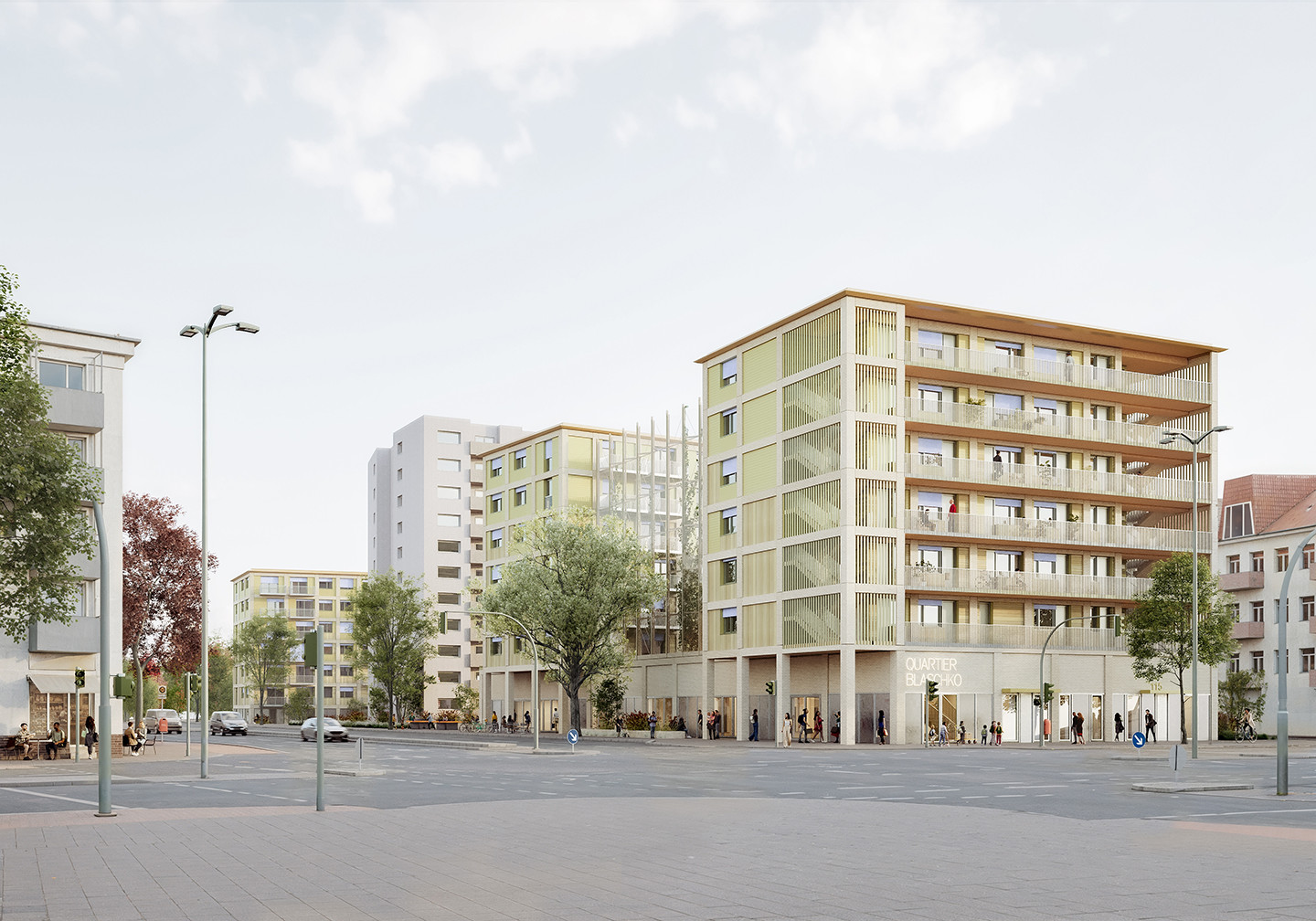
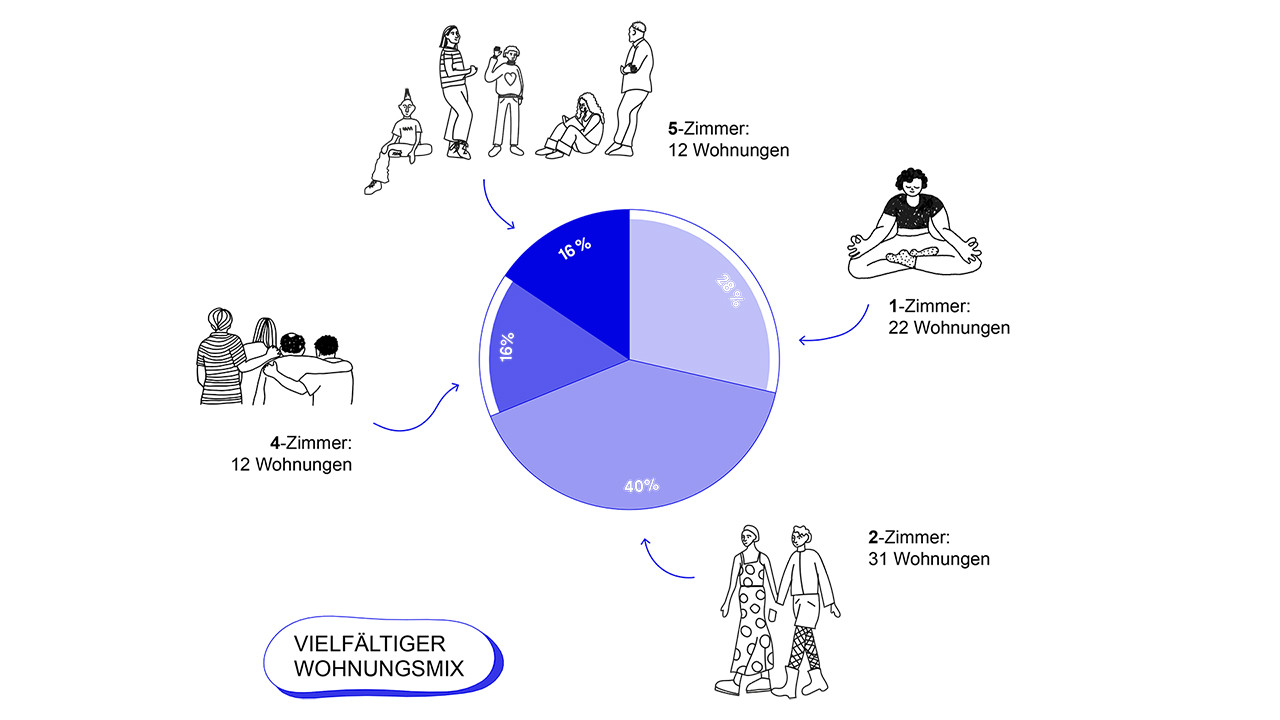
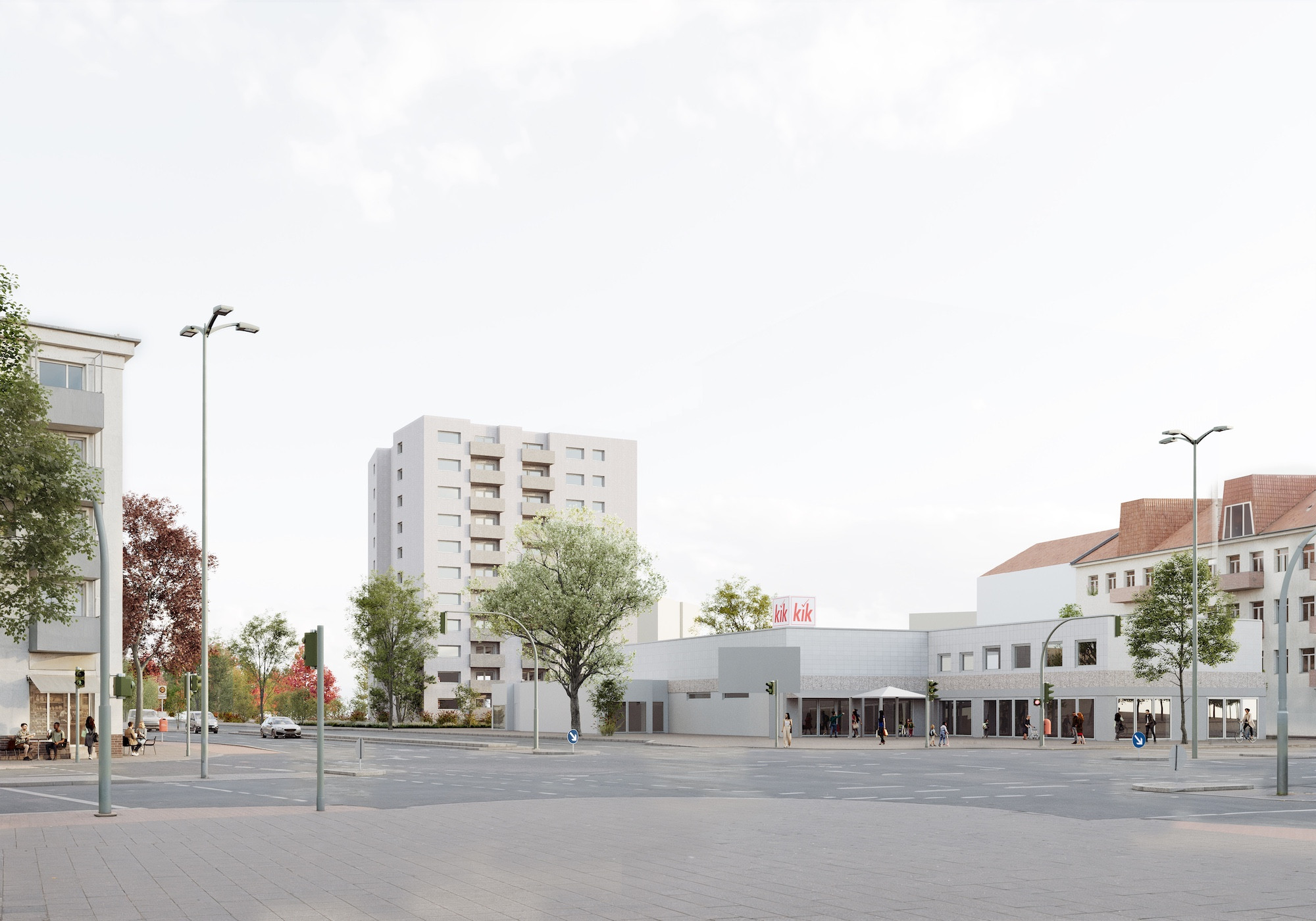
A new residential complex comprising 77 flats is being built in Berlin-Britz, the majority of which are planned as subsidised housing. The project will thus create affordable homes to suit a variety of lifestyles, thereby becoming a vibrant hub for a diverse community within the neighbourhood.
The urban design concept responds to the site: it echoes the scale of the terraced housing opposite. The positioning of the buildings bridges the gap between the existing high-rise and the surrounding residential blocks. The blocks are situated within a green space that extends generously across the entire site and combines a variety of features: on Blaschkoallee, a lively entrance area with permeable paving and tree plantings welcomes residents.
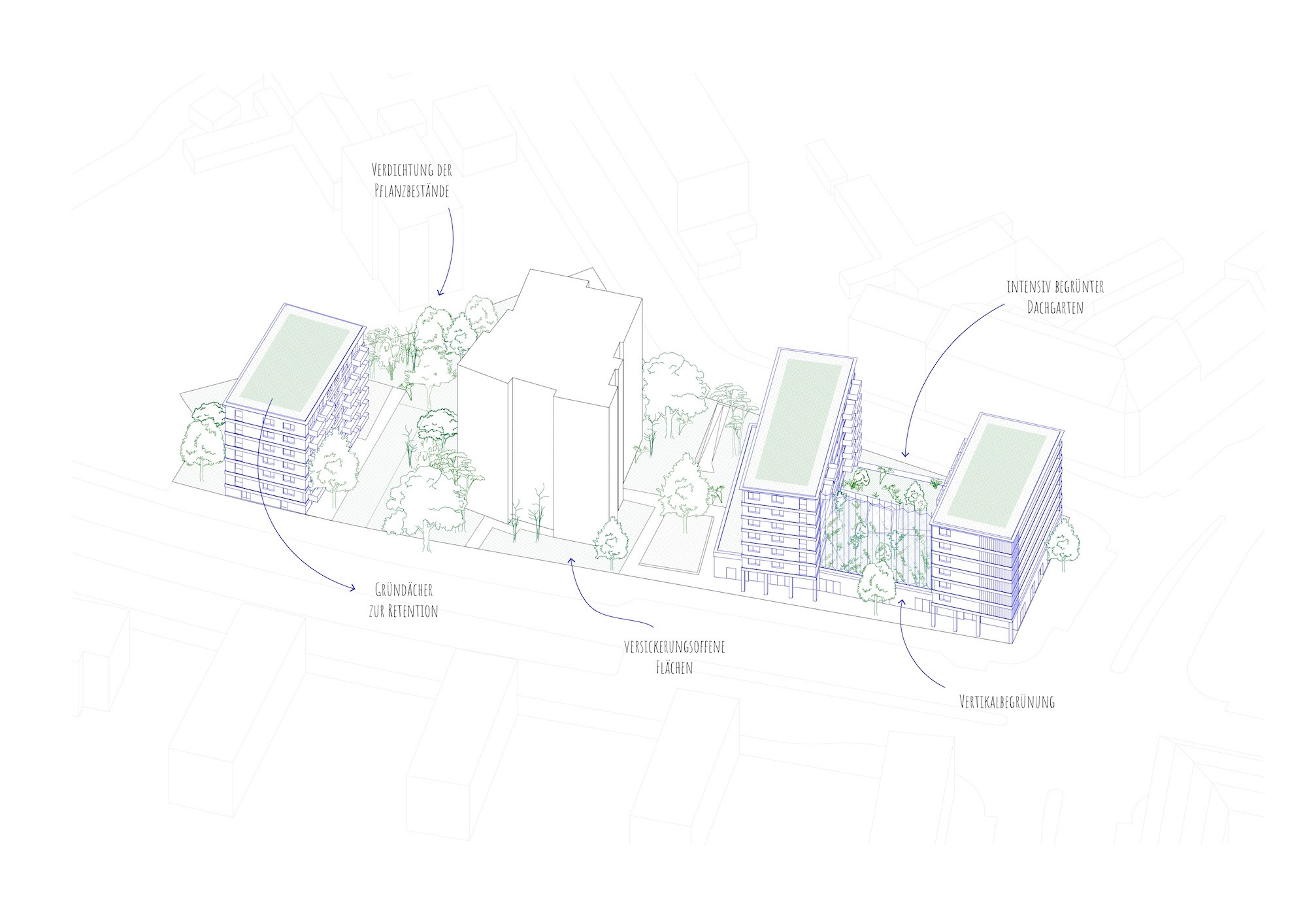
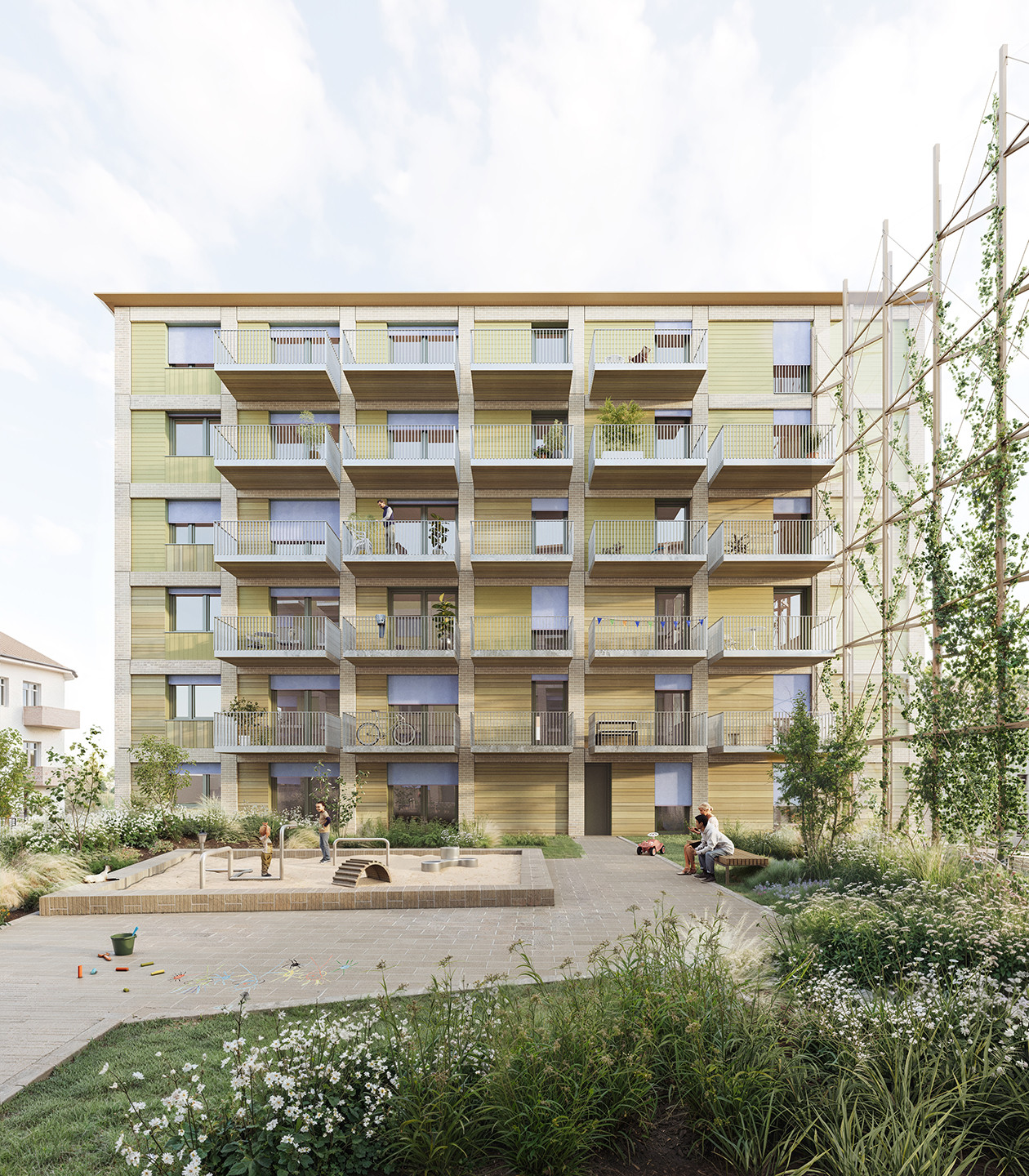
To the south, the established green space with its existing trees is largely preserved and is complemented by play areas and natural features. A border of tall shrubs and perennials, rich in flowers, forms an ecological buffer zone between private and communal areas.
A noise-protected, semi-public roof garden is being created on the commercial podium, featuring play facilities, terraces for the adjacent ground-floor flats and vertical greening. The interplay of unsealed surfaces, green roofs and existing vegetation increases the biotope area factor to 0.6 and consistently implements the ‘sponge city’ principle. Spaces for casual encounters amidst greenery strengthen the sense of belonging in this densely populated urban neighbourhood.
The mix of housing ranges from compact one-bedroom flats to family-friendly layouts, all of which are accessible to people with disabilities. Balconies, terraces and communal open spaces extend the living space outwards and bridge the gap between private and communal life.
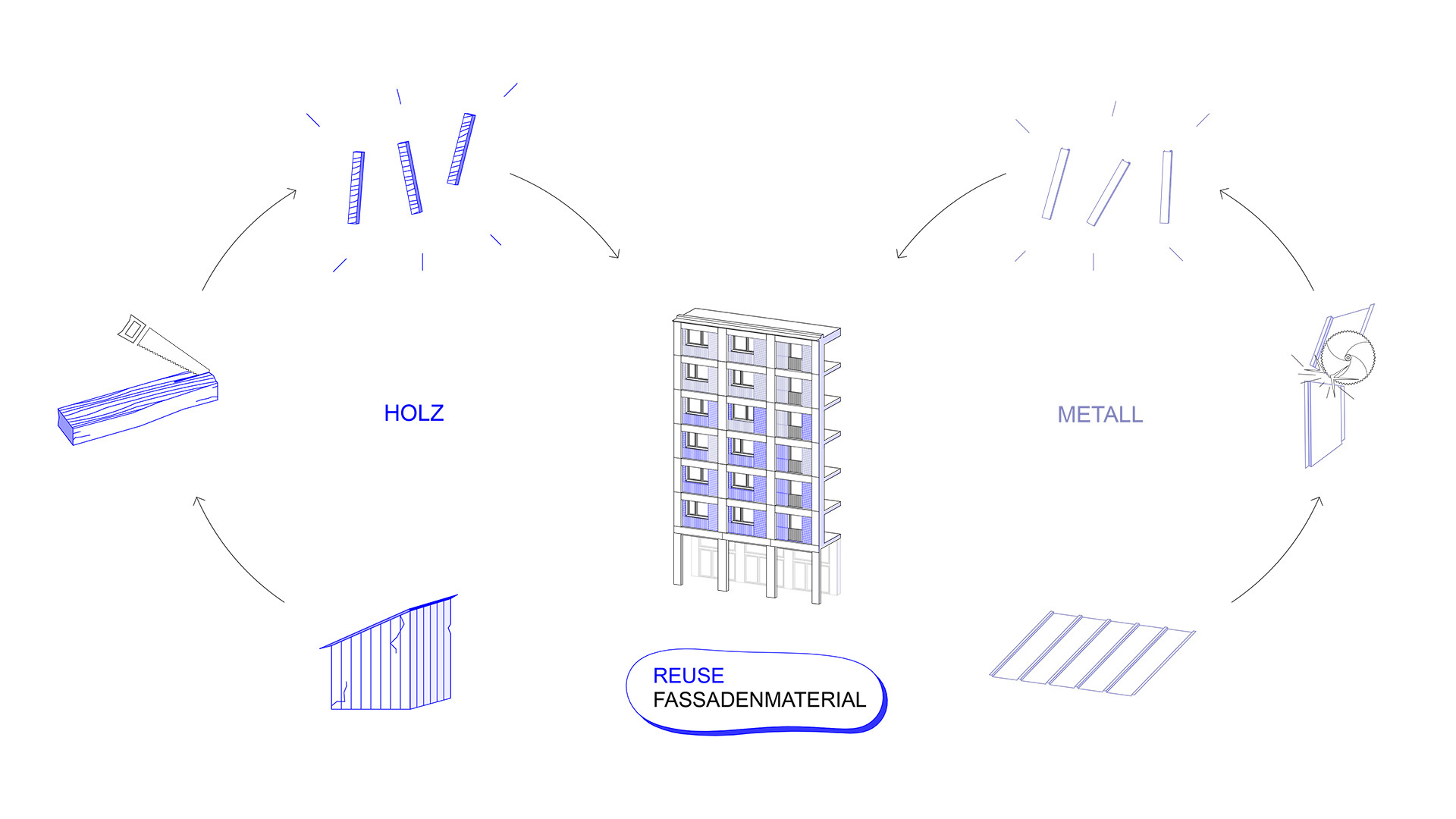
The buildings are predominantly planned as timber structures; extensively greened roofs promote biodiversity, whilst photovoltaic systems contribute to energy generation. The façade design consistently utilises reused materials – resource conservation as a design principle.
Commercial spaces are being created on the ground floor, which complement the neighbourhood well and bring the streetscape to life. Communal spaces and cycle parking act as catalysts for a neighbourly living environment.
The development combines sustainable construction with social quality, creating new housing for Berlin and a vibrant hub for the immediate neighbourhood.