
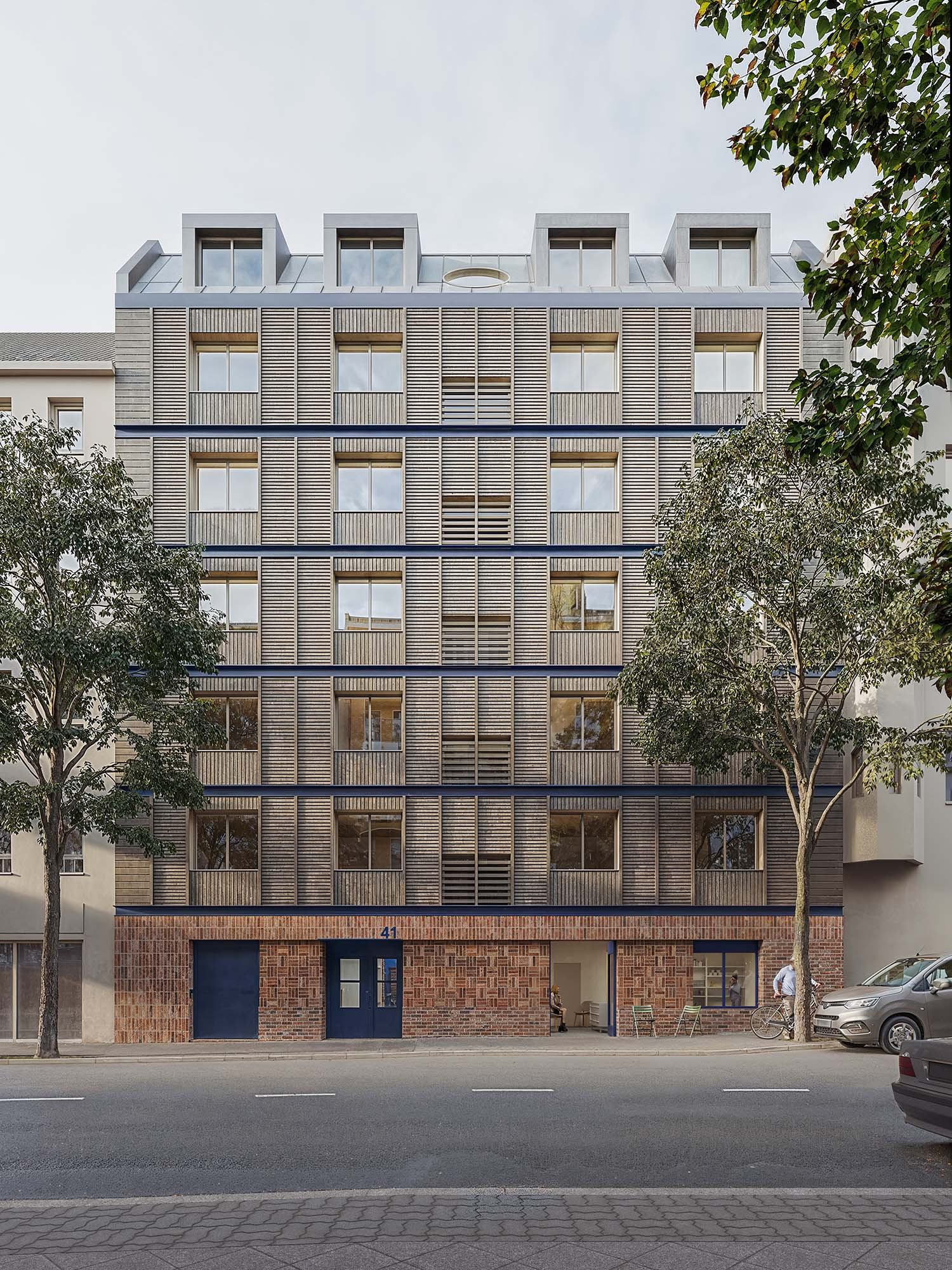
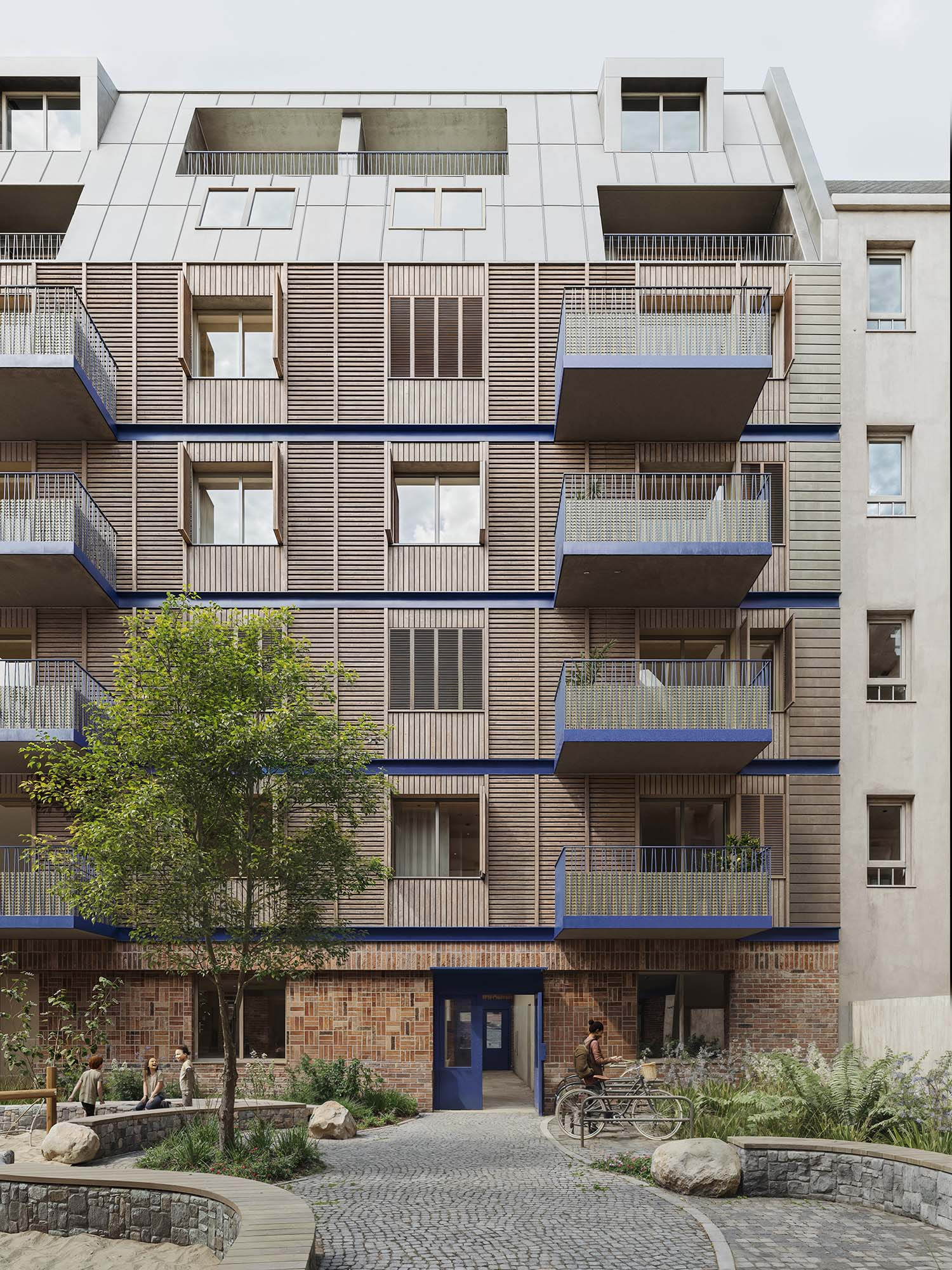
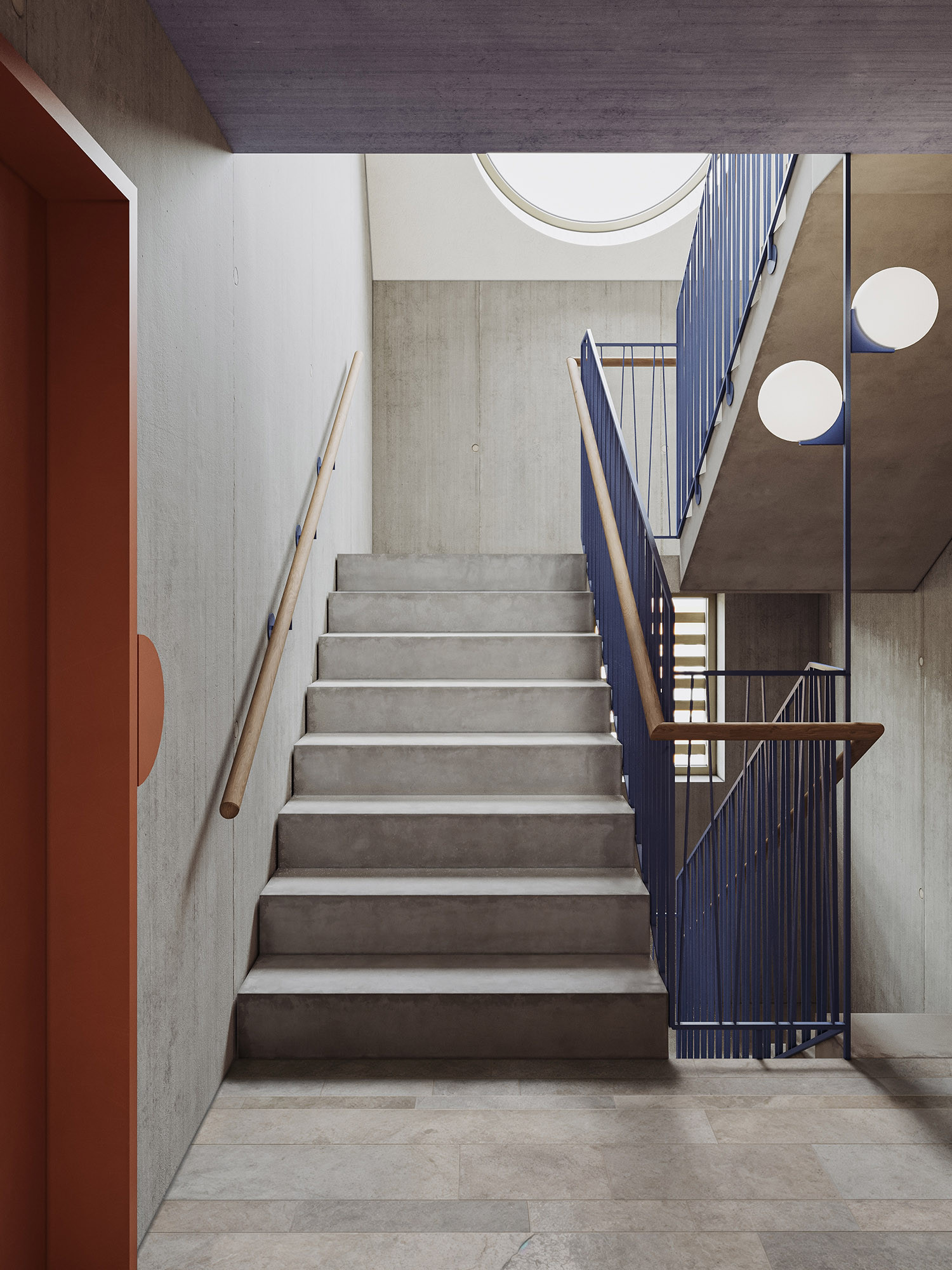
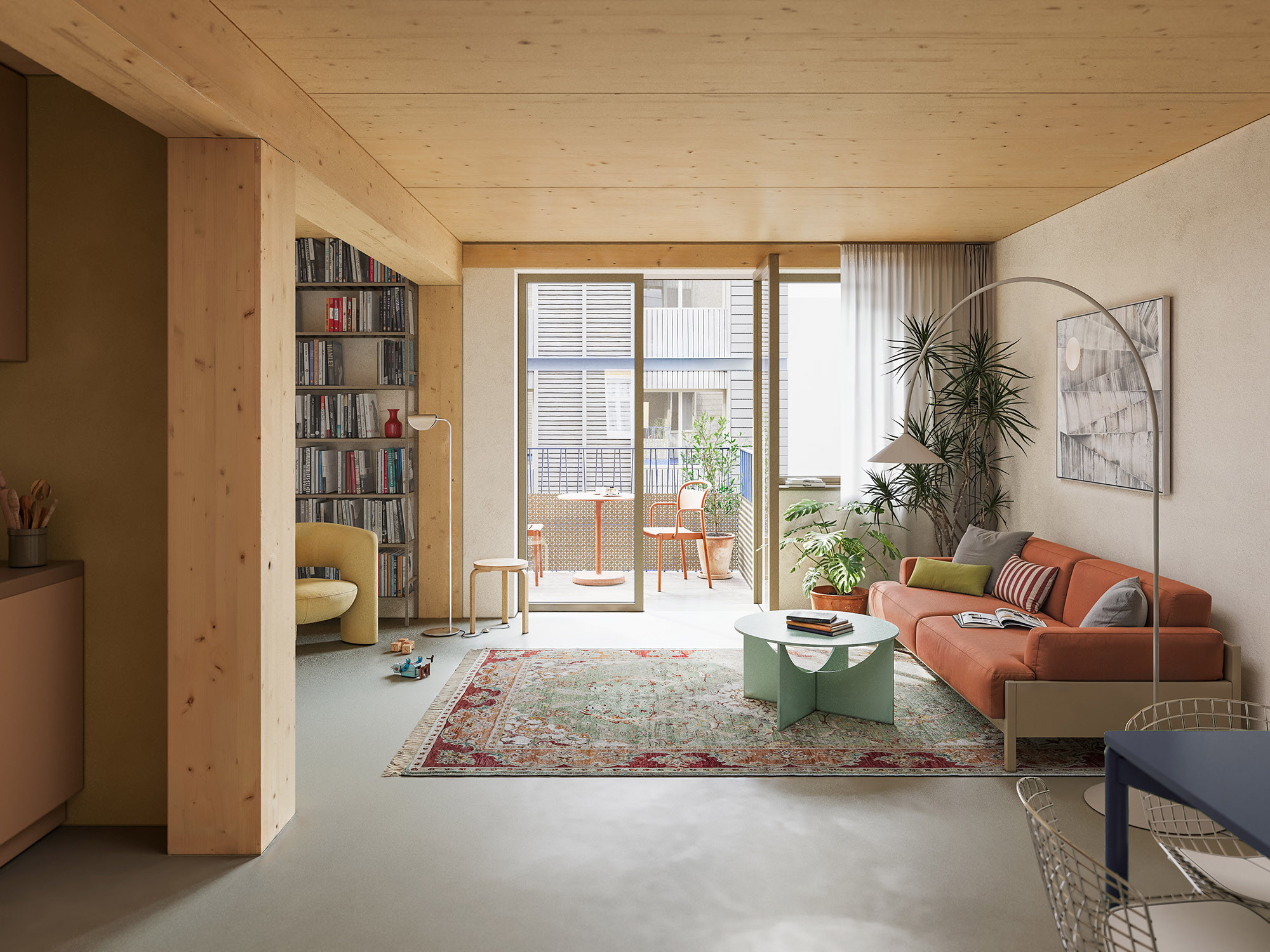
The design develops a gap-site building that understands densification as both a spatial and structural task. On a site with a significant change in elevation, a front building and a garden house are created, which integrate into the existing urban fabric in terms of scale and structure while simultaneously generating new, high-quality living spaces.
A central approach of the project is the conscious handling of existing resources. Part of the building components is sourced through reuse processes and specifically integrated into both construction and interior fit-out. Planning with existing elements reduces embodied energy and CO₂ emissions and combines ecological responsibility with economic efficiency.
The buildings are designed as timber frame structures with a high degree of prefabrication. Load-bearing structure, building envelope, and interior fit-out are clearly separated to facilitate maintenance, adaptation, and eventual deconstruction. The deliberate avoidance of basement structures reduces construction effort and simplifies execution. Reused façade elements consistently extend the circular approach into the architectural expression.
The spatial structure organizes the ensemble and creates different qualities of use. A shared courtyard promotes interaction and exchange, while quieter garden areas provide retreat and relaxation. This results in a balanced relationship between communal living and private space.
The apartments are clearly and functionally organized. Equivalent private rooms enable flexible layout variations that can adapt to different living models. The structure supports long-term usability and creates economical, resource-efficient housing with strong everyday functionality.